Racing reform roadshow: what breeders need to know
20 Nov 2026
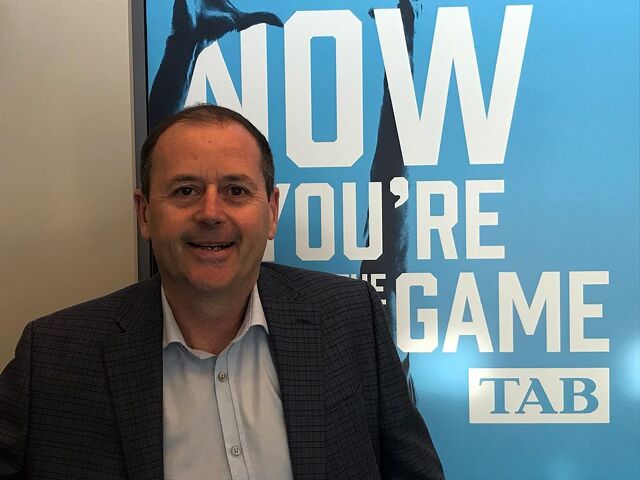
Nothing has been decided yet. That was the first message from Dean McKenzie, independent Chair of the Establishment Board, when he fronted this week’s industry roadshow to explain the reform recommendations now sitting with the HRNZ and NZTR boards and TAB NZ.
The Establishment Board is a temporary body, formed in August under terms of reference agreed by the two codes and TAB NZ, and it is made up of two directors from each code, two from TAB NZ and two independents in Mr McKenzie and Greg Tomlinson. Its job was to test the governance and property recommendations the TAB advisory committee made to the Minister in June, and it has no power to enforce any change, with the final decision resting with the clubs of each code at a special general meeting.
He was also clear that this is not Project Stamina, which is a separate venue process being run by the two codes, although he accepted the two could link up at some stage if the reform programme proceeds.
The two recommendations
The Board has unanimously recommended a voluntary route that works inside the existing Racing Industry Act, on the basis that changing the legislation could take three to five years and would depend on the Minister and government of the day.
One engine room. Racing New Zealand, the joint body already provided for in the Act, would become the single strategic and administrative vehicle for both codes, running finance, HR, IT, procurement and funding from one head office and negotiating the commercial funding agreement with TAB NZ on the codes’ behalf, ideally locked in for three to five years. HRNZ and NZTR would keep their legal identities and the duties that cannot be delegated under the Act, such as rules and licensing. The codes would still appoint all four voting directors of Racing New Zealand, one each plus two agreed between them, with two non-voting advisory directors added to round out the skills at the table, and if the codes cannot agree on the shared two the Act hands that choice to the Minister.
An Equine Capital Fund. The second recommendation is about making the industry’s assets work harder. Mr McKenzie said there was $136 million in cash sitting on code and club balance sheets in the 2025 financial year, with only around half of it being used well, and he contrasted a club term deposit earning around 3 percent with what a professionally managed fund can return. Clubs could choose to pool cash into a managed fund while keeping ownership of it, and a more complex property arm would allow capital from non-strategic assets to be recycled into priority infrastructure, ring fenced so that each code’s assets are used for that code. Participation would be voluntary, and the Board’s current position is that a club choosing not to join would not be penalised through its funding.
The savings case
The Board has landed on potential savings in the range of $9 million to $14 million a year, and Mr McKenzie noted that against roughly $150 million paid out in stakes, finding $15 million would amount to a lift of about 10 percent from doing the same things more efficiently. He was candid that the figure cannot be validated until a new structure has been designed and costed, and that the quality of the industry’s existing data is poor. The Board has the least confidence in the venue and club share of those savings, given the money flowing to clubs and venues has been flat or gone backwards in real terms, and more confidence in the governance, administration and marketing categories.
Where breeding sits
Breeding came up repeatedly through the roadshow. Mr McKenzie described the breeding numbers as stark, having halved in half a generation, and noted it is an international trend rather than a New Zealand problem alone, which in his view means the industry collectively has to do something different to reverse it.
Members should be aware that the advisory committee’s original package of five recommendations included the tax treatment of breeding, but that item needs legislation and sits outside the Establishment Board’s brief, as do government funding of the Racing Integrity Board and the further modernisation of TAB NZ. The NZSBA will keep pressing for breeding to be front and centre as the detail is developed.
Questions from the floor
Track closures. Asked whether this means closures and super tracks, Mr McKenzie said not necessarily, but he pointed to France and California as examples of the consolidation happening internationally and said some of it is inevitable here over time.
The owners’ voice. An owner challenged how 15,000 owners get a say when only clubs vote, and said many had not been told the meeting was on. The answer was that the legislation puts the decision with clubs, that owners are heard through forums like this one and the owners’ federation submission, and that communication will be better before the next round of roadshows.
One fund or regional funds. A speaker argued any property fund should be one national fund rather than regional pots. Mr McKenzie said his regional example was illustrative only, that “region” is not defined in the Act, and that too narrow a view hurts everyone, given southern meetings rely on Canterbury horses, trainers and drivers.
Who owns what. It was noted that very few harness clubs own their venue outright, with most on reserve or leasehold land, and the Board is still compiling a full record of the industry’s property holdings.
TAB revenue. Domestic racing is heading towards 5 to 10 percent of the TAB’s business, so what matters is the profit that flows to the codes as beneficial owners and how well the codes spend it.
If the codes cannot agree. The status quo continues in the short term, and the only other route is legislation on the government’s timetable.
Shared services. There was support from the floor for a single organisation handling functions such as the racing bureau, stud book and licensing for both codes.
What happens next
The codes and TAB NZ are considering the recommendations now, with the aim of agreement in principle by the end of the year. If that is reached, the detailed legal, financial and design work would be done in the first quarter of 2027, with the full case going to the code boards and then to clubs for a decision in the second quarter, and more roadshows to come before any vote.