
Where Are They Now: Kylie Ree
19 Nov 2025
Kylie Ree was never meant to be the one who changed a family. She was talented, yes, but she didn’t come wrapped in the sort of pedigree that normally foreshadows Group 1 success as both a racehorse and a broodmare.
Yet she found a way to do both. She found a way to beat one of the best age-group trotters we’ve seen in Paramount Geegee, and then years later, through a series of quirks, near misses, setbacks and sheer bloody-minded persistence from the people around her, she found a way to produce a Dominion winner. Hers is the kind of story that makes breeding feel less like statistics and more like fate.
Kylie Ree was bred by Wes Davies and began her education under Maree Price, who guided her through her first five juvenile starts, including her first placing at Timaru. She was a filly who kept showing a hint of something more. Enough ability to keep the faith. Enough heart to earn another start. When she transferred to the All Stars under Mark Purdon and Grant Payne, the signs became harder to ignore. A second placing at Reefton confirmed she was moving the right way.
Her timing, of course, coincided with the juvenile dominance of Paramount Gee Gee. The son of Pegasus Spur opened his career with six straight wins, including the G3 NZ 2YO Trotting Stakes, and had the measure of the entire crop. Most horses accepted the script. Kylie Ree didn’t. After running sixth behind him in that Group 3, she turned the tables in the G2 Sires Stakes Championship. Securing the one-one, she peeled out and ran straight past the unbeaten colt, winning by a length and a half and snapping the most intimidating juvenile streak of the era. Nathan Williamson, who finished third with his own runner Latheronwheel, still remembers the day, though at the time he had no idea he would one day breed a Group 1 winner from her.
Her win propelled her into Harness Jewels contention, starting second favourite in the 2YO Ruby behind Paramount Gee Gee on his home track at Cambridge. When he galloped early, Kylie Ree controlled the tempo, led throughout, and delivered her first Group 1 in 2:00.1. She would be crowned NZ 2YO Trotting Filly of the Year.
At three, she reappeared in Auckland, winning fresh-up at Alexandra Park — somehow starting at odds that didn’t reflect her credentials. But her racing story was destined to be short. The final chapter came at Ashburton in the historic Hambletonian. Once again she lowered Paramount Gee Gee’s colours — one of only two defeats he suffered from ten 3YO starts. He would go on to win both NZ Derbies, the Harness Jewels 3YO Ruby, and the Breeders Crown — all Group 1 races. Across ages two, and three, he was beaten only four times. Three of them were at the hands of Kylie Ree.
Behind that brilliance, however, was fragility. “She got herself an injury after her two-year-old year,” Nathan explained. “Brian raced her, Maree Price had her earlier on, then she went to Mark. She won those feature races, but yeah, she hurt herself, and that was it really.”
He pauses for a moment when talking about her. There’s still admiration there. And, ultimately, gratitude. Because retired early, Kylie Ree became a broodmare — and everything changed again.
Her maternal family, on paper, was thin. Her dam Nerokilo was by Clever Innocence, a son of Nero who left only 14 trotting winners in New Zealand. Nerokilo herself was the only winner out of Five Kilos — and of the mare’s five siblings, the other four who qualified did so wearing hopples. You had to go back to 1910 to find the last direct trace of significant trotting success on her tail line. A few sparks — Highly Likely, William Dee, Don King — but nothing resembling a path to a Dominion winner.
If there was any hidden magic, it began with the McCully family. They bred her first foal, She’s Allthe Craze (Crazed), and to understand her career is to understand some of the chaos that shaped the family.
Nathan remembers her well.
“He just rang and asked whether I'd train She’s Allthe Craze,” he said. “She had a lot of ability, but she was frustrating. She had a lot of tie-up issues. She was never a big, robust mare. She took a long time to come of age.”
He had her early in her development, and at times she looked a genuine feature mare before her body betrayed her. “She looked really good when she started her career and then went quite a few average races for me,” Nathan said. “Seasonal problems, tying-up — just little things. Bruce Negus got her later and did a sterling job. I think she even had stints with Michael House as well.”
She won eight races, placed sixteen times, and finished second in the G2 Northern Breeders Stakes.
The McCullys also bred Springbank Lachie (Majestic Son). Nathan’s father Phil purchased him at the yearling sales.
“Dad bought him at the sales — paid good money for him,” Nathan said. “He won the 2YO Trotting Stakes at his first start. He was a pretty smart horse.”
But again, fragility intervened. “He had an issue which curtailed his career,” Nathan said. “He had quite a significant problem there. One of those horses we probably never saw the best of.”
The third foal, Hawaiian Hula (Dream Vacation), was bred by Nevele R and purchased by Nathan. She was talented — talented enough to be one of those horses you always kept a close eye on.
“She had bad knees,” Nathan said. “That curtailed her. But she had a lot of ability. She only won the one, but she was talented.”
She now resides with Nathan’s wife, Katie, and has already produced the promising juvenile Diva Bee (Marcoola). When asked what became of her recent form, Nathan laughed.
“She’ll race in about four hours, mate. I’m flying home to drive her today.”
“She had a couple of starts before the winter, then a break. She’s had three trials this time. We think quite a bit of her.”
This family has always had a way of mixing promise with patience.
The fourth foal was Kiwi Trix (Trixton). Nathan explains how they bred him.
“We actually bred Kiwi Trix with Brian. Brian had part of him. He was always talented. Won as a three-year-old early. He didn’t have the best gait — a bit awkward. More comfortable right-handed. He won a race for me in Auckland and then raced up there for Crystal Hackett.”
Like most of the family, he had ability, quirks, and the habit of delivering just enough brilliance to keep you dreaming.
The fifth foal was Son Of Patrick (Father Patrick), who fetched strong money at the yearling sales and became a high-quality age-group performer for the Purdon stable, placing multiple times at Group 1 level behind Five Wise Men.
Nathan summed him up perfectly: “Extremely talented at two and three — but had issues later. One of those horses with enormous ability.”
But the story of Kylie Ree as a broodmare will always centre on her final foal: Gus (Majestic Son).
Bred and owned initially by Nathan, his development was slower — deliberately so.
“Not really niggles,” Nathan said. “Just because I bred him and owned him myself — when you get busy, it’s your own ones that miss out. He showed a bit as a two-year-old, but I wasn’t in a rush. I wanted to keep his manners good. He was a wee bit hot early on.”
Those early decisions shaped him. His staying power. His toughness. His mind.
Gus was sold to Queensland after winning his second start at Wairio. He quickly announced himself as a genuine player, running fifth in the G1 Great Square at only his fourth Australian start, qualifying for the Inter Dominion Final, winning the G2 Darrell Alexander, then the G3 Pryde’s EasiFeed Sprint in 1:54.8, and finishing fourth in this year’s Inter Dominion Trotting Final.
But Cup Week 2025 changed everything.
Returning to New Zealand, he produced one of the great modern trotting doubles — the Dominion and the NZ Trotting Free-For-All — becoming only the 19th horse in history to sweep both.
And Nathan, remarkably, was in the race — driving his own mare, Hidden Talent.
“I never knew the result until I trotted back,” he said. “I pulled up in the back straight and couldn’t see the finish. To breed a horse like him — to see him dominate our biggest week — it was pretty cool.”
He pauses again, this time with something softer behind the words.
“She was just a lovely mare,” he said of Kylie Ree. “Such a lovely mare. It was sad, really. She passed after we weaned Gus. Not the way you want a mare like that to end her days. You’d rather see them live out their life. But she left us a hell of a legacy.”
Today that legacy continues through Hawaiian Hula — who is due to foal a Classic Connection soon — and through Diva Bee, and her siblings waiting in the wings.
The decisions about where they go next are ongoing.
“I was thinking about one stallion, then changed my mind,” Nathan said. “We lost a Tactical Landing weanling and have a return service. She’s quite a big mare — Tactical Landings are big — maybe too big. I’m in two minds. But you know…”
He pauses again.
“Maybe I should just go back to Majestic Son. It might be quite good.”
After all, that cross made Gus — the trotter who came home and conquered Cup Week.
The remarkable thing about Kylie Ree is that none of this was pre-ordained. She wasn’t bred to be a foundation mare. She wasn’t from a fashionable family. She had no commercial pull. Her pedigree page offered little hint that she would revive a maternal line that had gone cold for a century.
But she did.
She beat one of the greatest trotters of her generation not once, but three times. She left a G3 winner, a G2 winner, a Jewels performer, a derby placegetter, multiple elite juveniles — and a Dominion champion.
Her family is alive again. Influential again. And sitting right at the centre of it all is a mare who simply kept finding ways to be better than she was supposed to be.
Where is Kylie Ree now?
She is everywhere she needs to be — in the pedigree of Gus, in the emergence of Diva Bee, in the foals yet to be born, and in the hands of the breeders and horsemen who believed in her even when the page didn’t.
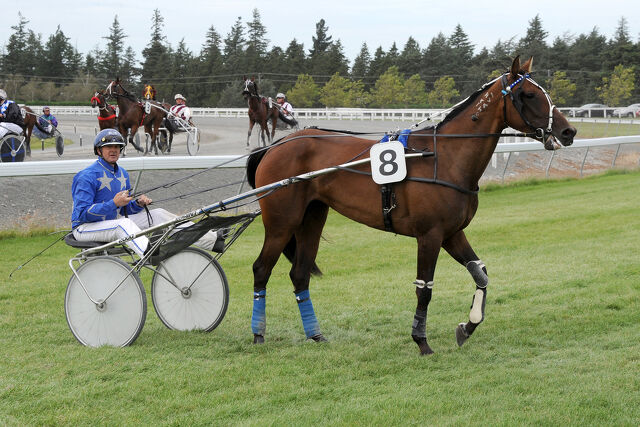
Kylie Ree and Mark Purdon after winning the G3 Hambletonian in 2011